The History of the Personal Keepsake Box and What We Choose to Keep
Explore the history of the personal keepsake box through its changing uses, and learn how to choose, arrange and care for objects tied to memory.
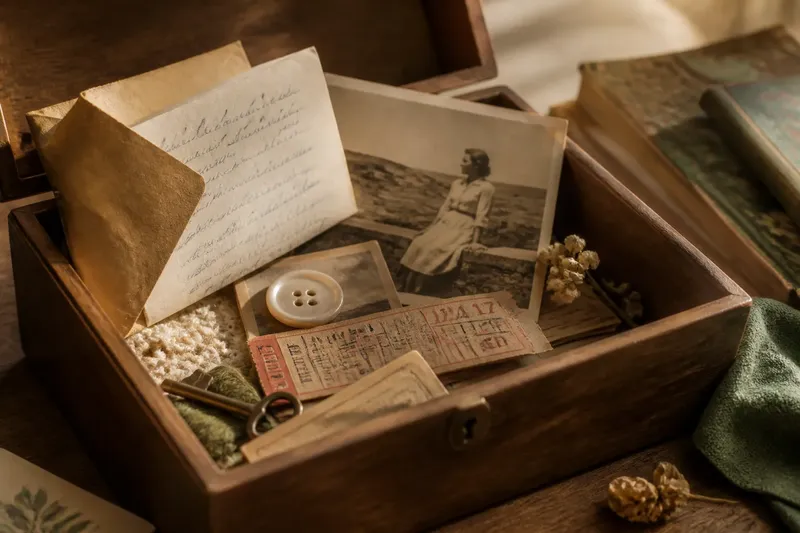
A folded note slips from an envelope as you lift the lid of a small box. Beneath it are a button, a ticket and a fading photograph. The history of the personal keepsake box is best understood through such ordinary objects: not as one continuous tradition, but as a set of ways people have gathered and protected things that matter to them.
There is no single origin point or universal form. A decorated casket, a plain wooden box and a repurposed biscuit tin can all serve the same personal purpose. Their histories depend on the people who owned them, the objects available to save and the meanings attached to those objects.
What makes a box a keepsake box?
A keepsake box holds objects valued chiefly for their personal associations. These might include a child’s drawing, a travel token, a recipe card or a scrap of fabric. The objects need not be rare or valuable in a market; their importance lies in the people, places or moments they bring to mind.
The distinction between keepsake and storage is not fixed. Spare buttons kept for mending are practical supplies; one button from a favourite coat may be saved for its connection to someone or something. A box may contain both kinds of things, and its purpose can change over time.
A keepsake box does not preserve the past intact. It gives selected fragments a place, making the act of choosing part of the story.
How have people used boxes to keep personal things?
Containers have long served the practical purpose of keeping belongings together and protected. Their forms vary widely: a household might use a carved chest, a small wooden box or a reused tin. It is safer to speak of these as recurring uses rather than a single history in which one kind of keepsake box gradually replaced another.
Some containers were made to display wealth or protect valuable possessions; others were simply useful. A smaller box could gather letters, photographs, tokens or scraps that might otherwise be misplaced. Whether such a collection was private, shared or passed on depended on its owner and household.
As photographs, postcards and travel souvenirs became familiar objects in many homes, people had more kinds of small mementoes they might choose to save. The effects were not the same for everyone, and a box did not have to contain a formal collection. A tin might hold an uneven assortment, with no labels and no intended audience.
Think of the history as many overlapping habits: protecting possessions, gathering small objects and giving personal memories a physical place. A container can serve all three purposes at once.
How did the meaning of keeping shift?
A box can function as storage, a private collection or an informal archive. These uses overlap, but they are not identical. Storage keeps an item available for use; a collection brings selected objects together; an archive aims to retain records and their context. A keepsake box may borrow from each without following the rules of any one.
Unlike a carefully arranged album, a box can accommodate irregular objects and unfinished notes. A ticket may sit beside a shell or a letter, even if the items do not tell one complete story. The arrangement can be loose because the keeper, rather than a public catalogue, supplies much of the context.
That does not mean a box records a life completely. It reflects what someone chose to keep, what survived and what was available to them. A keepsake is evidence that an object was saved, not a full account of everything that happened.
What can keepsakes tell us about memory?
An object can prompt a memory without proving every detail of it. A ticket may bring back a journey, but it cannot record what was said or how the day felt. A short note naming a person or place can preserve useful context while leaving room for memory to change.
Imagine you inherit a small tin containing a theatre ticket, a loose key and a stained recipe card. You recognise the key as a household spare, so you move it to a drawer with other useful keys; the recipe belongs with cooking notes; the ticket brings to mind an evening with your aunt. You keep the ticket in the tin and add a note saying what you remember about the occasion. The result is a more legible collection, not a complete account of your aunt’s life.
Which objects belong in a personal keepsake box?
Use a simple review to decide where each object belongs. For every item, notice its condition and association, then choose to keep it in the box, store it elsewhere, photograph it or ask its owner what they want.
- Specific memory: If an object brings a particular person, place or moment to mind, keep it in the box and add a brief note if the context may fade; if no association comes to mind, place it in a separate review pile rather than assuming it belongs.
- Practical use: If you still use the item, move it to the place where that task happens; if it is no longer useful but carries a personal association, consider keeping it as a keepsake.
- Bulky or fragile object: If a photograph would preserve what matters to you, take one and decide whether the original can be released; if its texture or material matters, keep the original and choose suitable storage.
- Someone else’s belongings: If another person owns the object or may want it returned, ask them before keeping it; if ownership is unclear, set it aside until you can check.
- Condition and material: If paper, photographs, fabric and metal can be stored together without risk of rubbing, staining or pressure, keep them in separate paper sleeves within the box; if their needs differ or you are unsure, store them apart and seek a conservator’s advice for valuable or delicate items.
- Context: If you know a name, place or occasion, write it on a separate slip and keep it with the object; if you are unsure, mark the detail as uncertain rather than presenting a guess as fact.
The decision need not make a perfect collection. It should make clear why each item has been given space.
How can a keepsake box stay useful and cared for?
A box can become difficult to use when its contents are packed so tightly that nothing is visible or easy to retrieve. During a review, lift out one item at a time and decide whether it still belongs there, should move elsewhere or can be released. A shallow tray or simple paper dividers can help separate objects without turning the box into a formal archive.
Write names and context on separate labels rather than directly on fragile photographs or documents. Keep delicate items away from things that could scratch, stain or bend them. If an object has substantial family or historical importance, or its preservation needs are unclear, consult a qualified conservator.
When several people contribute, note who owns each item and whether it may be borrowed or given away. Emotional significance does not automatically make an object communal property.
What do people ask about keepsake boxes?
What is the difference between a memory box and a keepsake box?
The terms overlap: both describe containers for objects connected to personal memories. “Memory box” can suggest a collection built around a person or period, while “keepsake box” can describe a less formal assortment.
Should a keepsake box be organised?
Some arrangement helps when it makes objects easier to find or protects delicate materials. A simple division by person, place or type can work, but a box need not resemble a formal archive.
Can digital keepsakes replace physical objects?
Scans and photographs preserve visible information and take little physical space. They do not retain an original object’s texture or marks of use, so you might keep a digital copy alongside one meaningful original.
When should I sort through a keepsake box?
There is no required schedule. Review it when the box becomes difficult to use, when you move or when its contents no longer reflect what you want to keep close.
Why does the personal keepsake box still matter?
The history of the personal keepsake box is not a simple progression from storage to sentiment. Practical protection, private attachment and informal record-keeping have often coexisted, with the balance shaped by the owner and the contents. That variety helps explain why a plain tin can matter as much as an ornate case.
If you start a box, choose a container that suits its contents, leave space to see what is inside and keep a separate note when a name or place may otherwise be forgotten. The most useful label may be a modest one: what you know, what you remember and what remains uncertain.